
April 1, 2026 | S. Richter | 10 minute read
Before the automobile, horse-drawn carriages were important both for moving people and goods. The carriage industry in Peabody was dominated by a few businesses, including Pike & Whipple (1830-1920s); Dole & Osgood (1822-1930s); and Charles W. Brine (1855-1920s).
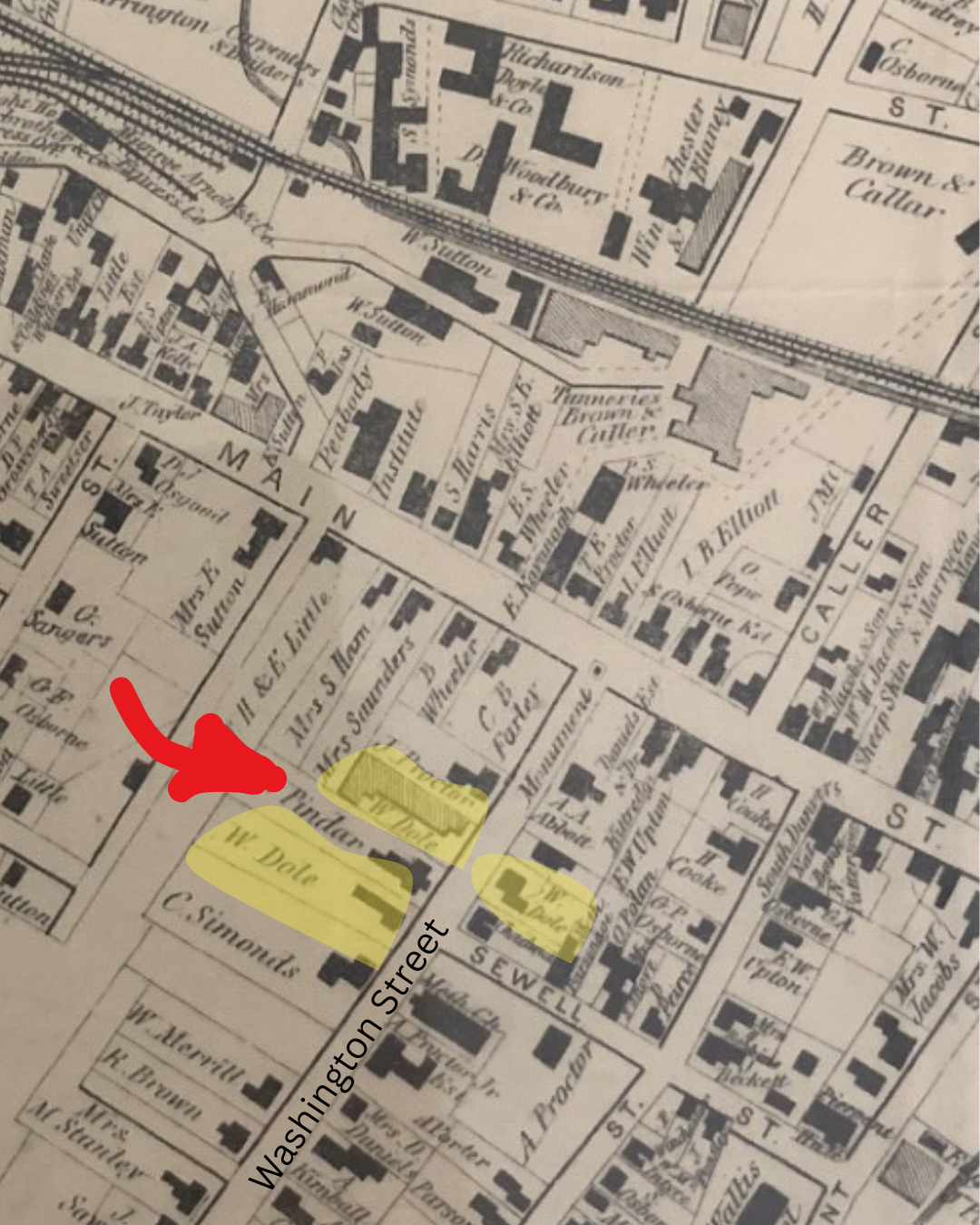
Peabody Business Map, Property Atlases, Insurance Map. Charles D. Craigie, 1872. Peabody Historical Society and Museum Collections.
Manufacturing carriages locally began to contribute sizably to the economy by the early 1800s. In part, this was a result of investment in infrastructure and production during and after the American Revolution that enabled a local economy of blacksmiths and wheelwrights to emerge. It was during this time that Peabody’s carriage manufacturers began to get off the ground.
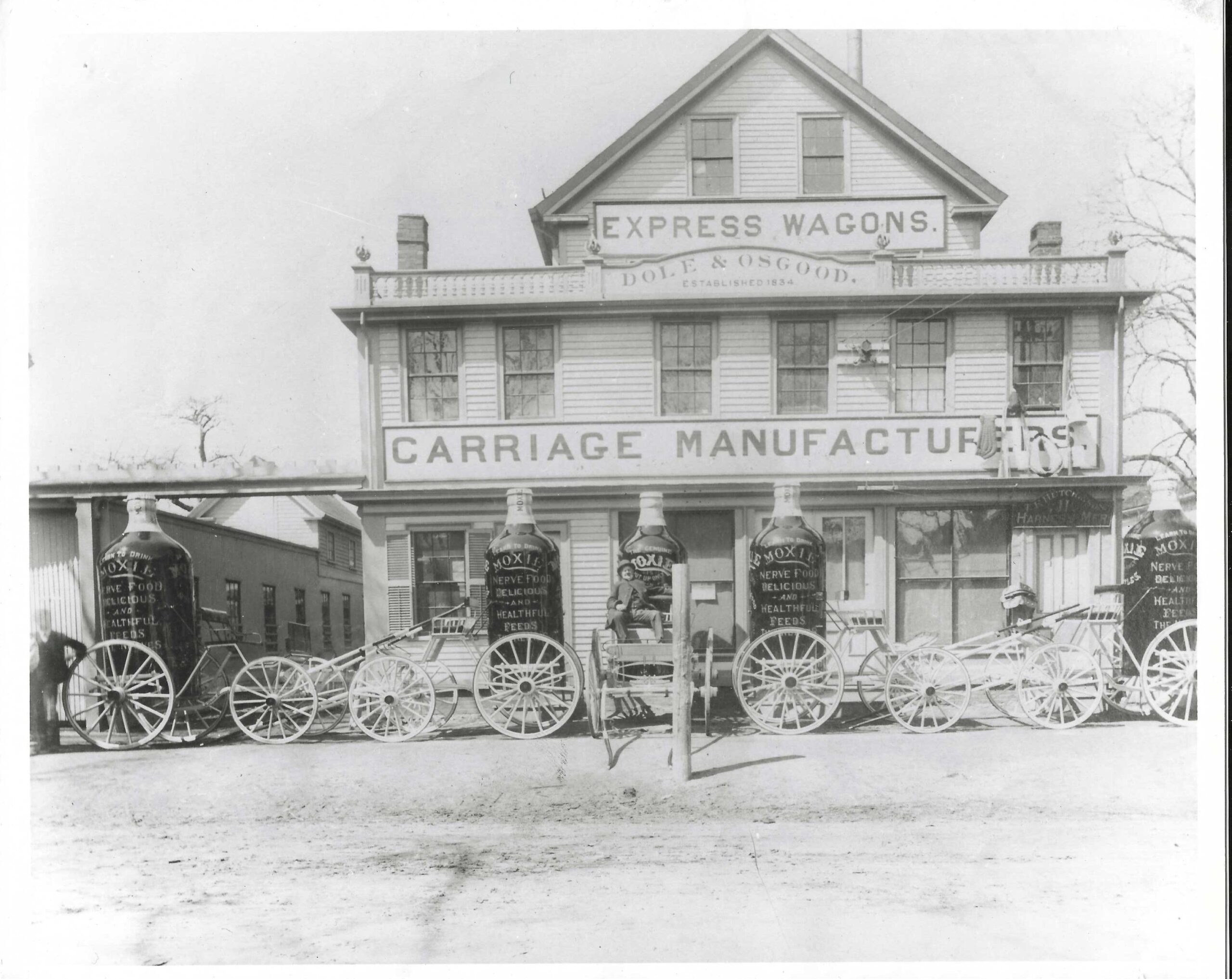
Dole and Osgood Factory, circa 1890. Photograph. Peabody Historical Society and Museum Collections.
The Dole Family of Peabody:
William Titcomb Dole was born in a house located on 14 Washington St. on August 15, 1816 to Moses Dole and Sarah Boardman Titcomb. Moses T. Dole was a blacksmith and had his own shop across the road on Washington St. in 1822.
Moses’ son William entered into the blacksmith business with his father in 1834 and later succeeded him. After his daughter, Mary Ellen Dole, married William Elwell Osgood in 187, William Dole began a partnership with Osgood, forming the Dole and Osgood carriage factory.
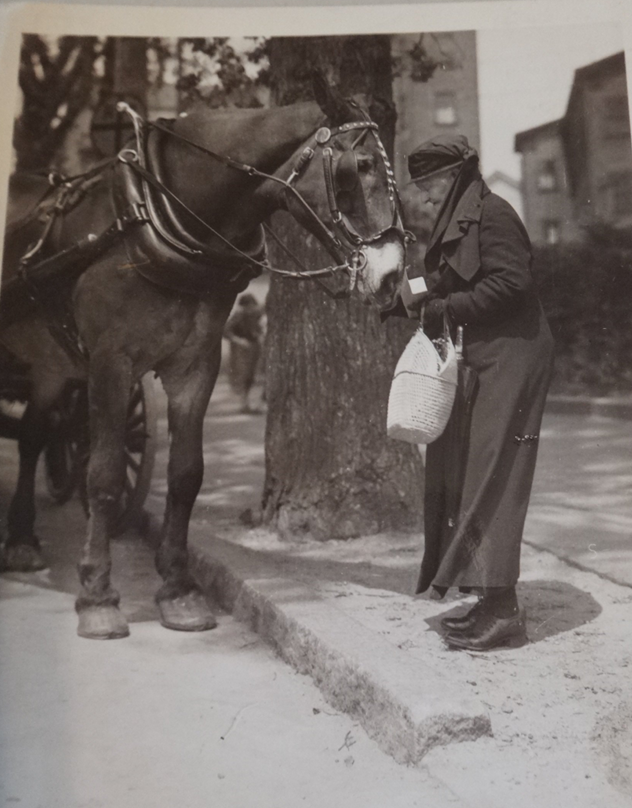
“Mrs. Walker, South Peabody, circa 1920,” Photograph, 2010.46.21. Peabody Historical Society and Museum Collections.
The Rise of America’s Carriage Industry:
At its peak, in the 1870s-1890s, Peabody’s roads were congested with wagons of all shapes and sizes. Before gasoline-powered cars, horses would have been the main source of energy used for transportation.
The expansion of the railroads and the number of farms across the country between the 1850s and 1890s increased the need for transportation. For example, in the 1880s, Dole and Osgood filled an order for carts to “be used on a new narrow gauge railroad to be built in Florida,” to bring oranges from the interior to the coast in order to supply the “New England market” (“Dole, Osgood Oldest Firm in This City,” Peabody Enterprise, 7 March 1930, page 3).
Dole & Osgood were widely known for producing carriages for commercial and municipal use. Among the uses of their carriages, Peabody’s fire department ordered a new hose carriage, and “the tires of the wheels of Steamer 1” from Dole & Osgood (Peabody Press, 11 December 1872, page 2).
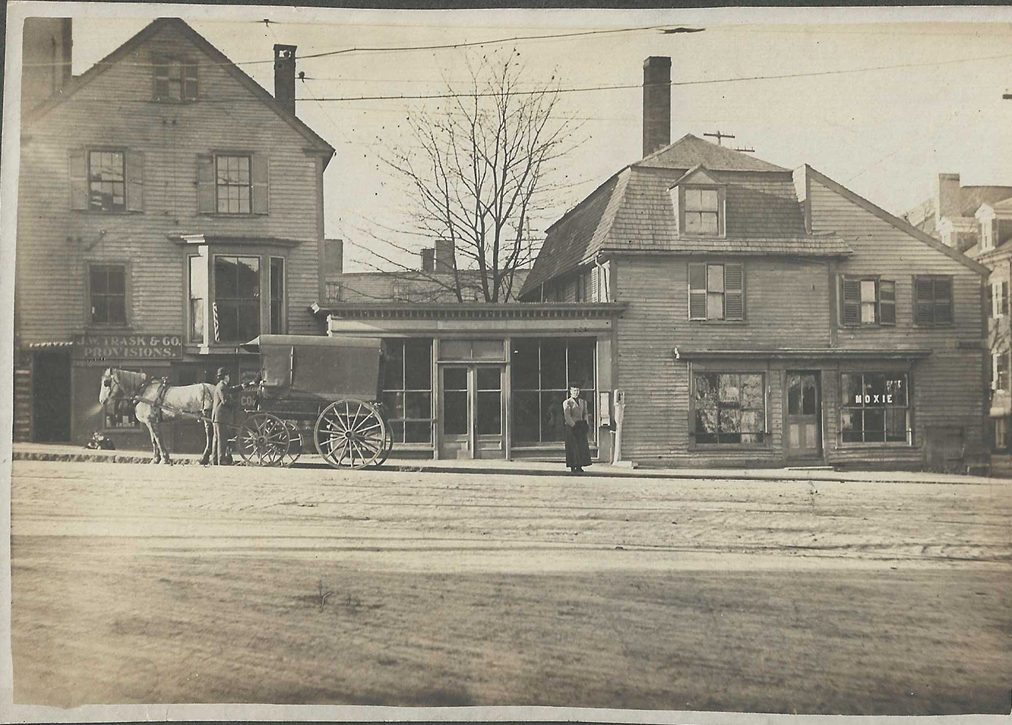
Main Street, circa 1890s. Photograph, 2026.00.2. Peabody Historical Society Collections.
Reaching a Global Market:
Quickly, their carriages were introduced to export markets. During the 1870s and 1880s, they were fulfilling orders for carriage ambulances in South Africa, and express mail carriages to Adelaide, New South Wales. Peabody was not alone in supplying a bustling export market for carriages. By the 1870s, American carriages were in demand world-wide, in part because of the ready supply of locally harvested wood and quality of craftsmanship. Carriage makers such as Lewis Downing of Concord, New Hampshire, began to export their carriages to South Africa and Australia.
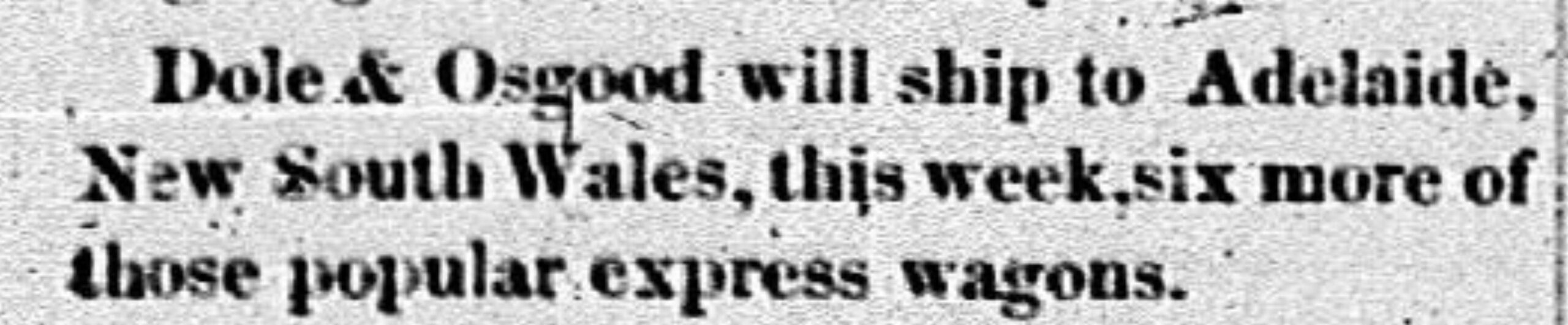
The Peabody Press, 16 August 1882, page 3.
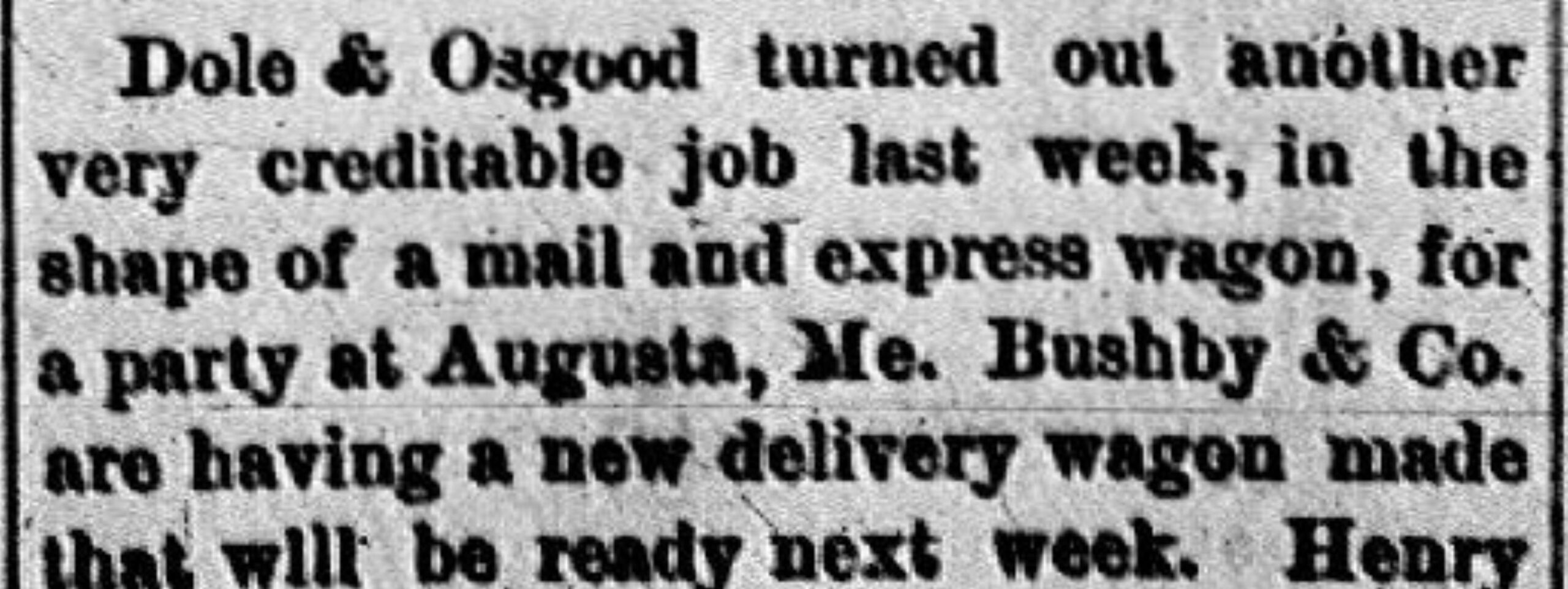
The Peabody Press, 2 June 1886, page 1.
Most famous among Dole & Osgood’s carriages was a personal luxury carriage produced for the Queen of Hawai’i, Liliʻuokalani. As this newspaper article stated, the carriage company had a number of “agents” in Hawai’i facilitating trade.
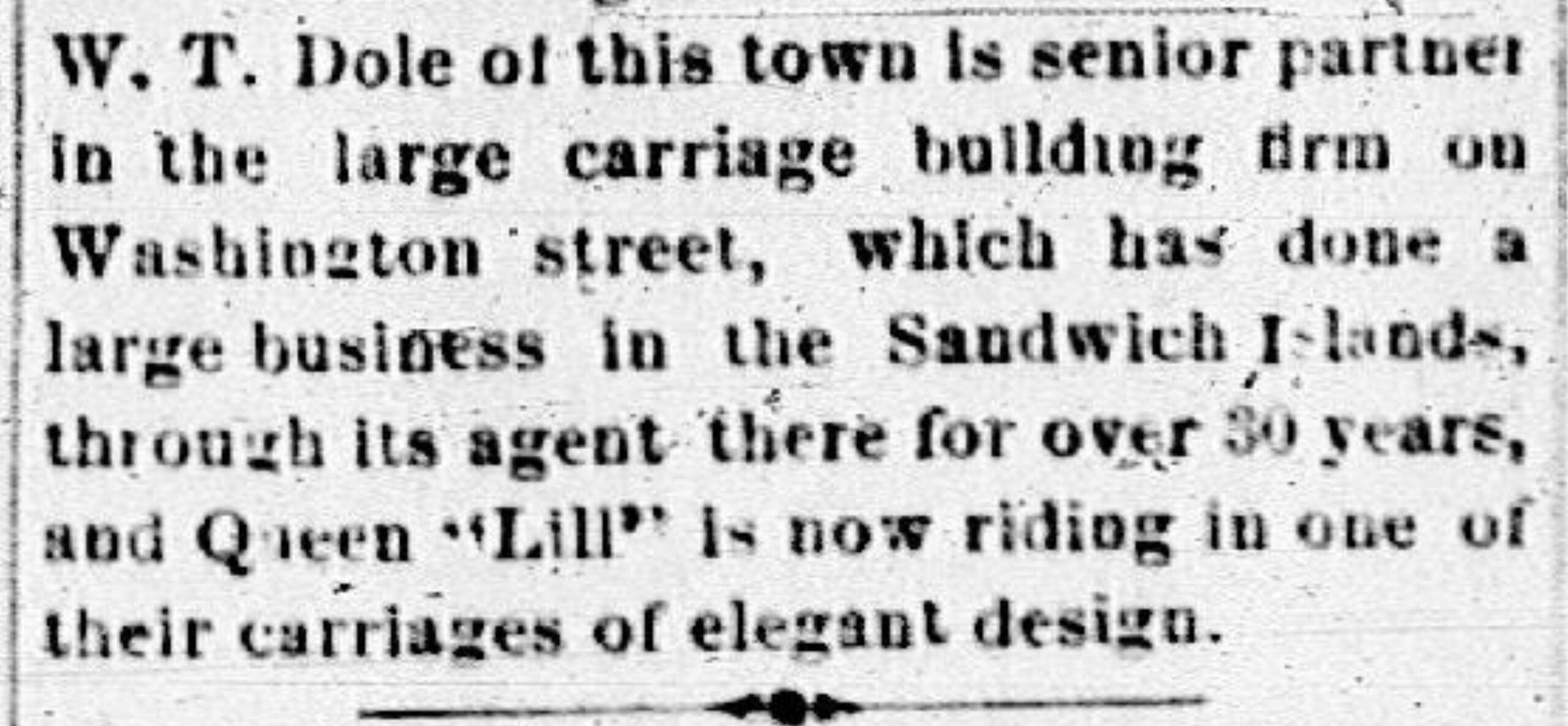
The Peabody Press, 13 January 1894, page 1.
There was only a very brief time in Hawai’ian history when Queen Liliʻuokalani reigned. This was between 1891 and 1893. In 1893-94, the Queen was deposed by a U.S.-backed coup. Having played a prominent role in the coup, the man who replaced the Queen was named Sanford Ballard Dole, the first president of the Republic of Hawai’i, and later the first governor of Hawai’i in 1898. One year later, a man by the name of James Drummond Dole moves to Honolulu to begin a farming venture. By 1920, his business would become the foundation for the corporation Dole Food Company.
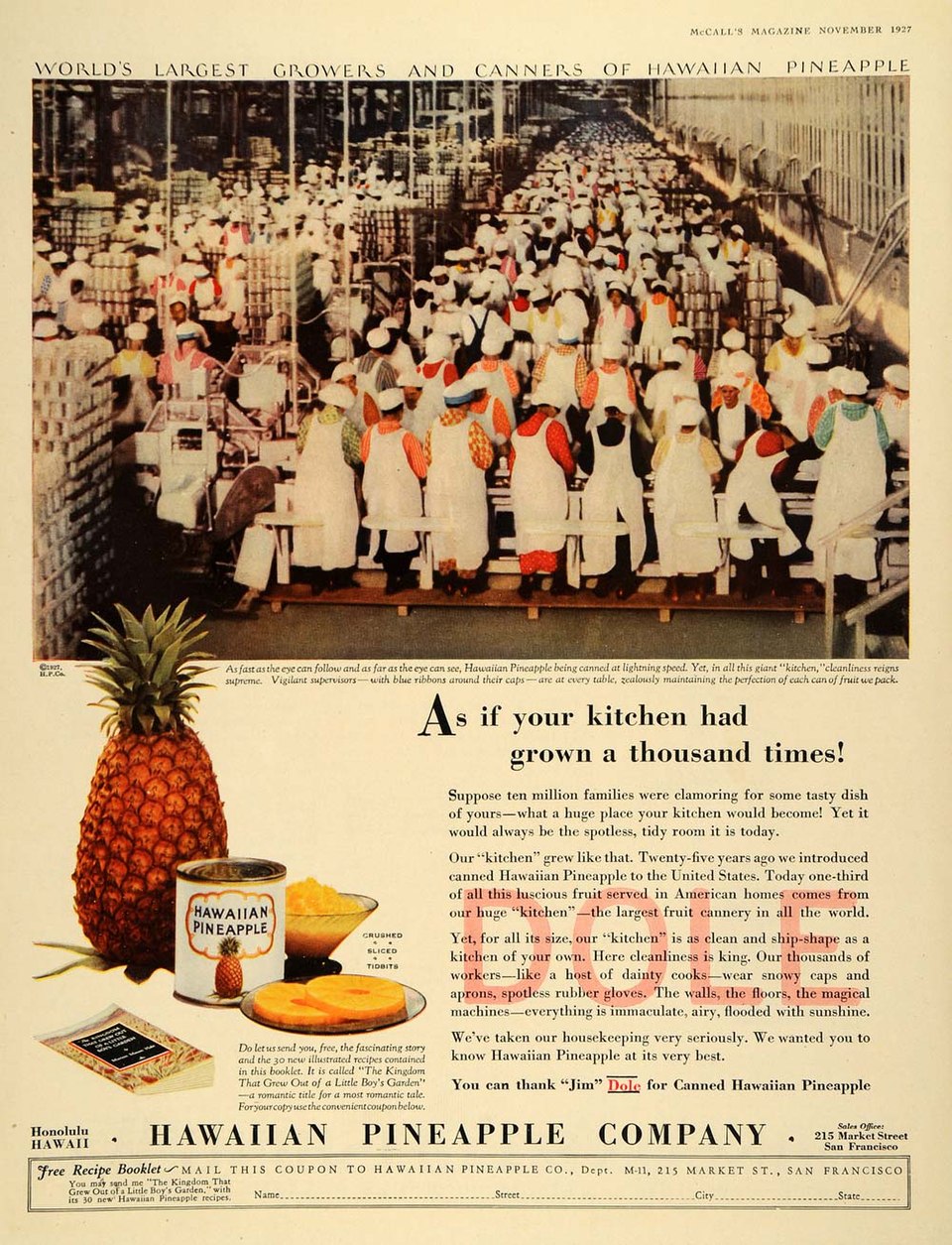
Advertisement, Dole Pineapple Company, 1927. Wikimedia Commons.
What do pineapple plantations have to do with Peabody?
At this point, if you are wondering if the Doles of the Dole & Osgood company had any connection to the Doles of the pineapple plantations and food production firm, you would be correct.
Richard Dole was a puritan settler of Newbury, Massachusetts Bay Colony, having been born in Rangeworthy, Gloucestershire, England around December 31, 1622 to William Dole and Joan Hale. Richard had three sons. One was William, the direct great grandfather of the Doles of Peabody, and the other was Abner, the direct great grandfather of the Doles of Hawai’i. From 1639 to 1807, both sides of the Dole family lived in Newbury, after which point the Abner side moved up to Maine, and the William side moved to Peabody not long after.
The Eclipse of the Carriage Industry:
William T. Dole died in 1906, just as the automobile began to eclipse the horse-drawn carriage. In 1908, Henry Ford released the Model T, the first widely affordable car produced at mass scale. By 1913, Ford Motor Co. Production lines could be found across the country, including in the greater Boston area. During this period of transition, W.E. Osgood and his two sons began to transition the company to service automobiles. As of 1930, eighteen people were employed. “Spokes and wheels are bought in Pennsylvania, and the wagons made and shipped in parts,” (“Dole, Osgood Oldest Firm in This City,” Peabody Enterprise, 7 March 1930, page 3).
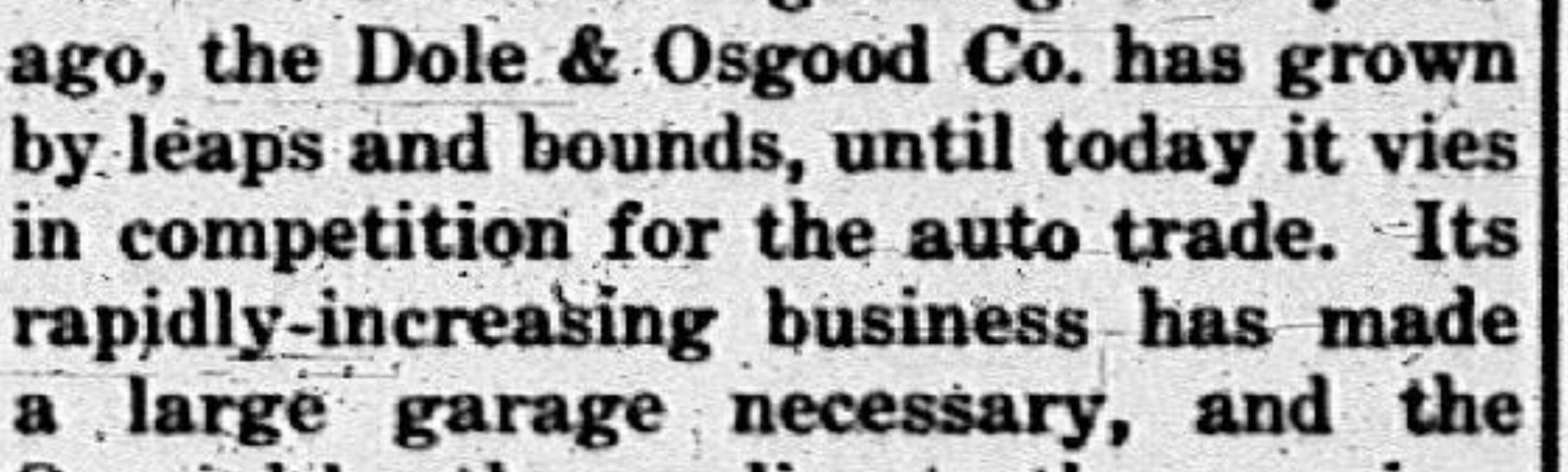
Peabody Enterprise, 13 April 1917, page 8.
The rise and fall of the carriage industry; the eclipse of horse-drawn transport by the automobile; development of modern agro-food corporations; and the imperial expansion of the U.S.; these are all stories that link Peabody with the wider history of the Industrial Revolution and its ripple effects.
Sources:
FamilySearch
John Wells, The Peabody Story
Peabody Historical Society and Museum Collections:
- Peabody Business Map, Property Atlases, Insurance Map. Charles D. Craigie, 1872. Peabody Historical Society and Museum Collections.
- Dole and Osgood Factory, Photograph, Peabody Historical Society and Museum Collections.
- Main Street, circa 1890s. Photograph, 2026.00.2. Peabody Historical Society Collections.
- “Mrs. Walker, South Peabody, circa 1920,” Photograph, 2010.46.21. Peabody Historical Society and Museum Collections.
- Dole and Osgood Factory, circa 1890. Photograph. Peabody Historical Society and Museum Collections.
Newspapers:
- Peabody Press, 11 December 1872, page 2
- The Peabody Press, 16 August 1882, page 3.
- The Peabody Press, 2 June 1886, page 1.
- The Peabody Press, 13 January 1894, page 1.
- Peabody Enterprise, 13 April 1917, page 8.
- “Dole, Osgood Oldest Firm in This City,” Peabody Enterprise, 7 March 1930, page 3
Further reading about the eclipse of the horse-drawn carriage industry in New England, and Dole Pineapple Plantation:
- https://www.civilbeat.org/2026/03/neglected-north-shore-plantation-waterways-fueled-damaging-floods/
- https://evols.library.manoa.hawaii.edu/server/api/core/bitstreams/127ebcb2-0f7d-43de-823d-ce8a7601eb1f/content
- https://lanaichc.org/plantation-life-on-lanai/
- https://kealakai.byuh.edu/dole-plantation-pineapple-paradise-unveiled
- https://edgeeffects.net/dole-pineapple-plantation/
- https://www.cambridgeday.com/2024/11/18/carriage-making-in-north-cambridge-was-giant-but-got-left-behind-when-the-automobile-arrived/
- https://www.masshist.org/database/viewer.php?item_id=3308&pid=42